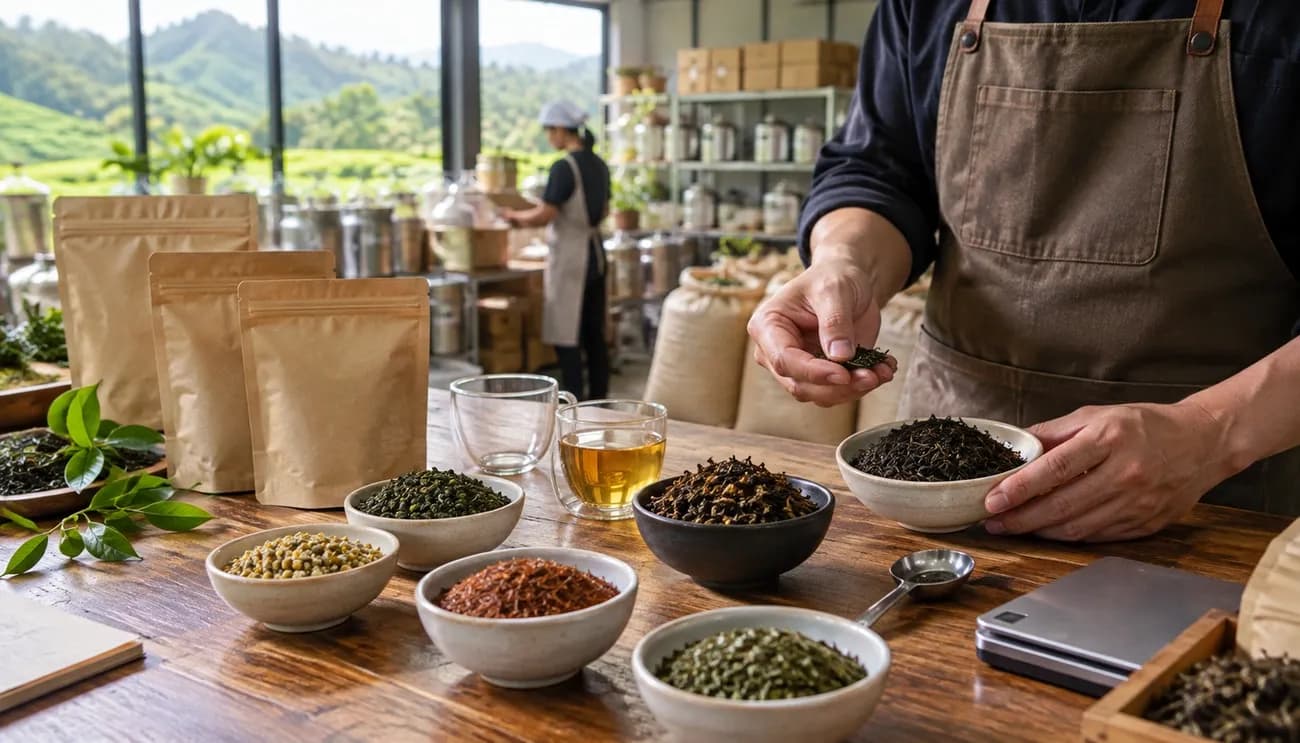
How to Buy Tea Wholesale in India: A Step-by-Step Guide for Business Owners
Successful wholesale tea buying in India requires more than a low quote. You need tea that your customers will order again.
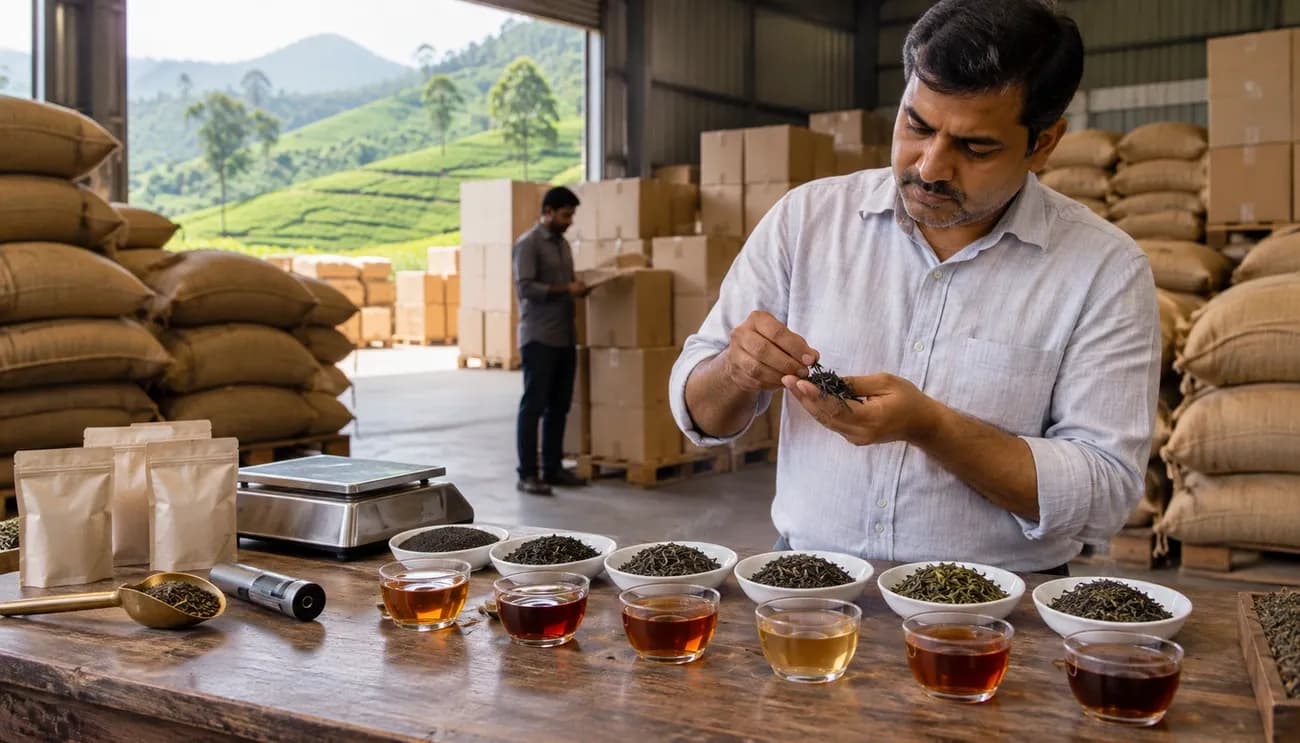
Successful wholesale tea buying in India requires more than a low quote. You need tea that your customers will order again.
Your choices affect wholesale tea prices, including the tea wholesale market, buying channel, grade, packing, and freight. This guide to buying bulk tea helps you compare loose leaf tea, wholesale tea bags, and private-label options. It suits buyers who want to buy tea wholesale in India for a local shop or source tea from India for wider sales. You will learn how to check samples, agree on clear terms, and plan tea India wholesale orders with confidence.
Key Takeaways
Follow these steps to source reliable wholesale tea in India while protecting quality, cash flow and repeat sales.
- Match tea type, format and order size to customer demand, brewing methods, storage space and realistic turnover—not the lowest per-kilogramme price.
- Choose markets and channels by tea profile: Guwahati for Assam CTC, Kolkata for orthodox teas, and South Indian hubs for Nilgiri varieties.
- Verify suppliers’ FSSAI and business records, then taste coded samples consistently and link every approved sample to a documented batch specification.
- Compare landed cost per kilogramme, including packing, freight, handling and taxes; secure payment, quality and replacement terms in writing.
- Start with a trial order, inspect deliveries against retained samples, store tea correctly and reorder using sales data, lead time and safety stock.
Step 1: Decide Which Tea and How Much to Buy
Match tea styles to your customers’ taste and brewing method
Start with the cups your customers already choose. A neighbourhood tea stall may need a strong, brisk black tea that works with milk and sugar, while a café menu may support green, white, oolong, herbal, or blended teas. Choose a focused range where each tea has a clear role instead of filling the menu with like options.
Let the brewing method guide your purchase. Loose-leaf tea allows larger leaves to expand during infusion and works well where staff can measure tea, control brewing time, and remove the leaves afterwards. Tea bags suit quick, repeatable preparation, especially when customers or staff need a simple cup with little handling. Pyramid bags give larger leaves and other ingredients more space to infuse while keeping the convenience of a bag.
Think about where and at what time customers drink tea. A quick-service counter may sell more everyday milk tea, while a restaurant can offer a smaller range of leaf teas that customers brew in a pot. If you serve tea with food, taste each option alongside the dishes you sell. Flavour pairings can affect repeat orders.
Keep the brewing process manageable for your team. Water temperature, tea quantity, infusion time, and equipment all affect the final cup. A tea that tastes excellent in a controlled tasting may perform poorly during busy service if preparation differs between staff members.
Choose loose-leaf tea, wholesale tea bags or private-label packs
Buying tea wholesale in India means choosing a format that suits your service model and sales plan. Loose leaf works well for cafés, tea counters, and retailers that sell by weight. Customers can see and smell the tea before buying it, and you can portion it into pots, cups, or smaller retail packs.
Wholesale tea bags offer speed and consistency. Individually packed bags also help keep tea fresh and suit hotels, offices, and high-volume hospitality service. Use larger or pyramid-style bags if the tea contains whole leaves, herbs, flowers, or fruit pieces because these ingredients need room to release their flavour.
Private-label packs work if you plan to sell tea under your own name rather than serve it straight away. Suppliers can pack tea in pouches, cartons, tins, and several tea-bag styles. Retail pack sizes can range from 50 g to 1 kg, so you can test smaller consumer packs before extending the range.
Do not choose packaging only because it looks more premium. Match it to the tea and your customer’s buying habits. Pouches may suit everyday teas and online sales, while tins can work for a gift range or higher-priced leaf tea. Decide whether you need bulk tea to prepare, finished packs to resell, or both. That choice affects your wholesale tea prices, storage needs, and the quantities you can commit to.
Estimate order size from sales, shelf life and storage space
Base your first wholesale tea order from India on expected sales rather than the lowest per-kilogramme quote. Review weekly tea sales or cup counts, separate fast-moving lines from occasional purchases, and order enough tea for a realistic selling period. A smaller first order gives you evidence of customer demand before you hold large amounts of a new grade or blend.
Shelf life sets the upper limit. Properly stored teas can keep their quality for many months, while herbal and fruit infusions are often more sensitive to moisture. Check the shelf life on each pack and plan a shorter turnover period so customers receive tea with its full aroma and flavour profile.
Storage capacity also limits your order. Set aside a dry, dark space away from heat and strong odours. Keep opened loose tea in airtight, non-transparent containers, and leave wholesale tea bags in their original packs or sealed containers. Fine grades such as dust have more exposed surface area than larger leaf grades, so use them sooner after opening.
Check how much stock your shelves or storeroom can hold before buying larger volumes of tea from India. Avoid crushing packs or mixing batches. Record each arrival date and use the oldest batch first. This routine shows which lines justify a larger repeat order and which should remain small seasonal purchases.
Step 2: Choose a Tea Wholesale Market and Buying Channel
Your source market should match the tea profile, volume, and buying method you chose in Step 1. If you buy tea wholesale in India, start with the regional market nearest the producing area. Then compare each available channel with your needs for traceability, lot size, and delivery support.
Siliguri and Jalpaiguri for North Bengal tea
Use Siliguri as a main wholesale market for Dooars, Terai, and selected Darjeeling teas. Its auction centre links North Bengal gardens with buyers, and local wholesalers can help you unite several grades into one workable order.
Jalpaiguri provides another option for North Bengal tea, especially when you have smaller purchase needs or want to compare regional lots. Ask for the estate or factory name, grade, batch reference, and packing date before you compare wholesale tea prices. This helps you avoid treating unlike teas as similar products.
Guwahati for Assam CTC tea
Choose Guwahati if your range needs strong Assam CTC tea for milk-based service, regular retail blends, or bulk catering supply. Assam produces both CTC and orthodox tea, but Guwahati has a strong link with large-scale CTC trading. The Guwahati Tea Auction Centre is one of the main centres for CTC tea auctions.
This market may suit you if your customers expect a bold cup and you need steady access to common grades. To cite an instance, ask wholesalers whether a quote covers BP, BOP, BPS, or dust instead of accepting “Assam tea” as a sufficient description.
Kolkata for Darjeeling and Assam orthodox tea
Kolkata suits buyers looking for Darjeeling lots, Assam orthodox tea, and higher-value whole-leaf selections. The market also gives you access to merchant traders who can arrange mixed-origin orders. This may help if you buy tea from India for a varied retail range.
Request samples from every proposed lot before you commit. Orthodox tea differs sharply by estate, season, and leaf grade, so two offers from the same broad origin can make very different cups. Compare each sample with the specification you plan to sell, not only with its price.
Coonoor, Coimbatore and Kochi for South Indian tea
Contact sellers operating through Coonoor, Coimbatore, and Kochi for Nilgiri and other South Indian CTC or orthodox teas. These markets provide access to teas with a brighter, quicker-brewing character than heavier Assam styles.
Buying near the source can reduce unnecessary movement between markets. Ask if the seller can unite tea India wholesale orders, arrange freight, and provide the packing format you need, including bulk sacks or finished wholesale tea bags.
Compare direct estates, auctions and wholesalers
Direct estate purchasing gives you greater control over origin and may suit named estates, particular flushes, or seasonal allocations. Estates may require larger commitments, though, and they may not combine multiple origins in one order.
Public e-auctions provide open price discovery for bulk loose-tea lots. Buyers must register with the Tea Board to participate, and successful bidders must complete payment and collect delivery orders within a set period. Choose this channel if you have buying expertise, tasting capacity, and working capital.
Wholesalers can suit first purchases because they offer smaller mixed orders, advice on grades, and delivery coordination. Ask every channel to quote the same specification, quantity, and destination. You can then compare the full buying cost in the next step.
Step 3: Check Suppliers and Approve Tea Samples
Assess the business and the actual lot once you shortlist a source before you treat any quote as comparable.
Verify business details, FSSAI credentials and trade references
Ask for the legal business name, address, GST details, FSSAI licence or registration number, product category and the despatch contact. Check the licence status through the public FoSCoS verification facility, then keep a dated result in your supplier file. Request two trade references from buyers with similar volumes and ask whether the supplier handled invoices, deliveries and replacements as agreed.
Check estate, flush, grade and batch records
Match each sample with a written lot record. Get the estate, harvest flush, leaf grade, invoice or lot number, harvest year, packing date and stated origin for named-origin tea. Grades describe leaf appearance and sorting rather than promise a flavour ranking. Keep the approved sample label, quote and record together so the bulk tea buying guide serves as a receiving standard.
Taste samples side by side using the same brewing method
Set out coded samples and brew them at the same time with the same tea weight, water source, water volume, temperature, vessel and infusion time. Assess the dry leaf, liquor colour and clarity, aroma, flavour, body, astringency, aftertaste and infused leaf. Record a score and brief note before you reveal the source. Use the brewing method your customers use for wholesale tea bags, to name just one example, then repeat the test with a demanding comparison brew if needed.
Review freshness, moisture and relevant food safety test reports
Inspect dry tea for evenness and a clean aroma. Soft leaf, mustiness or an off odour can indicate excess moisture or poor storage. Request the relevant certificate of analysis for the proposed lot, including tests required for your product and market. Ask for biochemical, pesticide-residue and metal-contaminant reports from an accredited laboratory for flavoured tea. A small sales sample cannot replace checks on the full consignment.
Step 4: Compare Wholesale Tea Prices and Agree Terms
An approved lot specification lets you compare commercial offers on a like-for-like basis.
Request quotes with the same grade, quantity and packing details
Send each seller the same written request with the tea type, grade, origin or blend, approved batch reference, quantity, bulk or retail packing format, and delivery location. State whether you need loose tea or wholesale tea bags. Quotes for a different grade, pouch type, or order size will not show the real difference in wholesale tea prices.
Calculate total cost per kilogramme, including freight and applicable taxes
Calculate the landed cost per kilogramme instead of relying on the tea rate alone. Add the tea price, packing, freight, handling, insurance where charged, and applicable taxes.
Freight can change the final cost sharply, and per-kilogramme freight rates usually fall as order weight rises. Ask whether the quote has GST, delivery, loading, and unloading. Record each cost separately.
Negotiate minimum orders, payment terms and price validity
Discuss the minimum order after setting the required quality. Minimums vary by grade and pack format. Private-label runs and custom-printed pouches often carry their own minimums.
Agree on the deposit and balance-payment point in writing. Confirm the despatch date and quote-validity period as well. You can offer a repeat-order forecast for a stable rate, but keep the quantity within your sales capacity.
Choose spot purchases or seasonal supply agreements
Spot buying suits a new line because you can assess each current lot before committing again. A seasonal agreement suits a proven, fast-moving tea india wholesale line that needs consistent supply. Prices can vary by tea type, grade, origin, season, quantity, and market conditions. Growers produce Second-flush Assam and Darjeeling tea during May and June, and it commonly carries a premium.
Put quality standards and replacement terms in writing
Attach the approved sample reference, grade, batch details, packing standard, and acceptable delivery date to the purchase order. State the inspection period, claim evidence requirements, replacement timing, and responsibility for return freight. This gives you a clear standard as you buy tea wholesale in India and receive the consignment.
Step 5: Place Your First Order and Plan Repeat Supply
Move from agreement to a controlled first delivery.
Confirm your business registrations and any buying-channel requirements
Confirm the FSSAI, GST and Tea Board requirements that apply to your business before buying tea wholesale in India, including any licence needed to distribute imported tea.
Start with a trial order linked to the approved sample
Place a trial order against the retained sample code and batch reference, along with the specification. Release payment only after these details appear on the order confirmation.
Agree packing, despatch dates and delivery checks
Put the pack format, net weight, carton count, sealing requirements, despatch date and delivery appointment in writing. Get the invoice and packing list, plus the batch record, before despatch.
Inspect incoming tea and record any damage or quality issues
Receiving staff should compare the cartons with the packing slips, photograph any damage and record discrepancies on the delivery receipt before signing. Sample throughout the lot and brew it beside your retained reference. Log the aroma, appearance and cup results.
Store tea away from moisture, heat and strong odours
Keep bulk tea sealed and opaque in a cool, dry cupboard. Store it away from spices and cleaning products.
Track sales, batch quality and stock levels before reordering
Track sales by batch along with feedback and stock levels each week. Reorder at: (average daily sales × lead time) + safety stock.
Conclusion
Buying tea wholesale in India is more reliable once you define your range and choose the right buying channel. Consistent tasting helps you approve every lot. Your first order should balance customer needs and storage capacity against freshness and total landed cost instead of focusing on the lowest quoted rate.
Clear specifications and verified records protect your business once the consignment arrives. Written replacement terms provide added protection. Careful receiving checks and proper storage help maintain the quality you approved.
Begin with a manageable trial order. Track sales and customer feedback, then reorder based on proven demand. This disciplined approach helps you build a dependable tea range that customers return to regularly.
FAQs
Where can I buy tea wholesale in India?
Key markets include Guwahati for Assam CTC, Kolkata for Darjeeling and Assam orthodox, and Siliguri and Jalpaiguri for North Bengal teas. Coonoor, Coimbatore and Kochi serve South Indian teas. You can buy through estates, auctions or wholesalers.
How can I check whether a wholesale tea supplier is reliable?
Verify their business details, FSSAI credentials and trade references. Request batch records and relevant food safety reports, then taste samples using the same brewing method before approving an order.
How much tea should I order for my first wholesale purchase?
Start with a manageable trial order based on expected sales, storage space and freshness needs. Confirm the supplier’s minimum order quantity, but avoid buying extra stock solely to secure a lower price.
How do I compare wholesale tea prices fairly?
Request quotes for the same tea grade, quantity, packaging and delivery location. Compare the total cost per kilogramme, including packing, freight, handling and applicable taxes—not just the tea price.
What registrations do I need to buy tea wholesale in India?
Check the FSSAI, GST and Tea Board requirements that apply to your business activity and buying channel. Tea Board registration is required to participate in public tea e-auctions.